
Jos Visit:”Why Tinubu Stayed at Jos Airport”– Presidency
The Presidency has clarified why President Bola Ahmed Tinubu did not leave the airport during his recent visit to Jos, Plateau State, attributing the development to tight scheduling and operational constraints.
In a statement issued on Friday, the President’s Special Adviser on Information and Strategy, Bayo Onanuga, said the visit was arranged at short notice following worsening security concerns in the state.
According to him, Tinubu had initially planned to receive Mahamat Idriss Déby Itno at the Presidential Villa before proceeding to Ogun State.
However, after a security briefing from Plateau State Governor Caleb Mutfwang, the President adjusted his itinerary to include an emergency trip to Jos.
Onanuga explained that the President’s earlier engagement with the Chadian leader, which focused on regional security cooperation, extended beyond schedule and delayed his departure.
He added that upon arrival in Jos, logistical challenges made it impractical for the President to leave the airport.
The road journey to the city centre, estimated at about 40 minutes, coupled with the airport’s inability to support night operations due to lack of navigational aids, constrained movement.
“As a result, it was not feasible to travel into the city, meet victims, and return to the airport before dusk,” the statement noted.
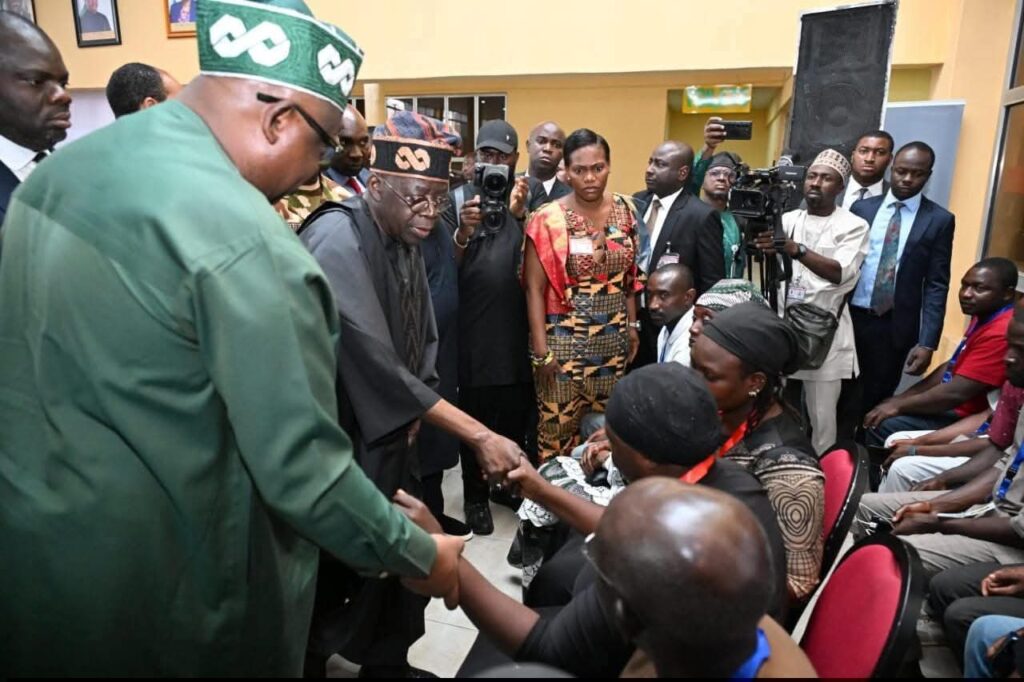
To address the situation, officials arranged for representatives of affected communities to meet the President at a facility within the airport premises. Among those present were top security officials who had earlier visited the scene of the attack in Angwa Rukuba.
The Presidency maintained that the visit was not merely symbolic but part of broader efforts to engage stakeholders and address the persistent security crisis in Plateau State.
Tinubu, during the interaction, expressed condolences to victims of the attack and assured them of the Federal Government’s commitment to ending recurring violence. He also pledged enhanced security measures, including the deployment of surveillance technology to strengthen monitoring and response capabilities.
The President’s decision to remain at the airport had earlier drawn criticism from opposition figures, including former Vice-President Atiku Abubakar, who described the move as inadequate in the face of a humanitarian tragedy.
However, the Presidency insisted that the constraints were unavoidable and that the objectives of the visit, engagement, reassurance, and strategic planning, were effectively achieved.
The Presidency has clarified why President Bola Ahmed Tinubu did not leave the airport during his recent visit to Jos, Plateau State, attributing the development to tight scheduling and operational constraints.
In a statement issued on Friday, the President’s Special Adviser on Information and Strategy, Bayo Onanuga, said the visit was arranged at short notice following worsening security concerns in the state.
According to him, Tinubu had initially planned to receive Mahamat Idriss Déby Itno at the Presidential Villa before proceeding to Ogun State.
However, after a security briefing from Plateau State Governor Caleb Mutfwang, the President adjusted his itinerary to include an emergency trip to Jos.
Onanuga explained that the President’s earlier engagement with the Chadian leader, which focused on regional security cooperation, extended beyond schedule and delayed his departure.
He added that upon arrival in Jos, logistical challenges made it impractical for the President to leave the airport.
The road journey to the city centre, estimated at about 40 minutes, coupled with the airport’s inability to support night operations due to lack of navigational aids, constrained movement.
“As a result, it was not feasible to travel into the city, meet victims, and return to the airport before dusk,” the statement noted.
To address the situation, officials arranged for representatives of affected communities to meet the President at a facility within the airport premises. Among those present were top security officials who had earlier visited the scene of the attack in Angwa Rukuba.
The Presidency maintained that the visit was not merely symbolic but part of broader efforts to engage stakeholders and address the persistent security crisis in Plateau State.
Tinubu, during the interaction, expressed condolences to victims of the attack and assured them of the Federal Government’s commitment to ending recurring violence. He also pledged enhanced security measures, including the deployment of surveillance technology to strengthen monitoring and response capabilities.
The President’s decision to remain at the airport had earlier drawn criticism from opposition figures, including former Vice-President Atiku Abubakar, who described the move as inadequate in the face of a humanitarian tragedy.
However, the Presidency insisted that the constraints were unavoidable and that the objectives of the visit, engagement, reassurance, and strategic planning, were effectively achieved.