

NNPC targets 430 million barrels in annual crude trading, profit rises to N7.2tn
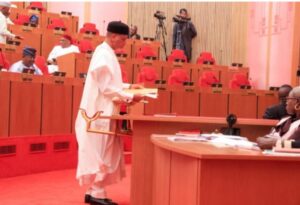
NNPC GCEO, Ojulari said NNPC may sell refineries, Bayo Ojulari from northern Nigeria
Add as a preferred source
The Nigerian National Petroleum Company Limited (NNPC Ltd.) has set a medium-term target of increasing its annual crude trading volume to 430 million barrels as it seeks to improve returns, strengthen capital efficiency and reposition its businesses for sustainable growth. The Group Chief Executive Officer, Bashir Bayo Ojulari, disclosed this while presenting the company’s performance and strategic outlook following the release of its annual financial results.
Ojulari said NNPC Ltd. was entering the next phase of its transformation with a stronger focus on commercial performance, operational efficiency, portfolio optimisation and shareholder value creation. Despite softer global oil prices caused by geopolitical tensions, trade frictions and increased supplies from OPEC+ and non-OPEC+ producers, oil and condensate production rose by five per cent, natural gas production increased by nine per cent, while the company’s equity volumes across oil, condensate and gas grew by 11 per cent.
He attributed the rise in oil and condensate production largely to new wells, targeted interventions at Oil Mining Lease 13 and improved asset integrity, which collectively contributed about 32,400 barrels per day. Gas production growth was driven by stronger performance from projects including Uzu field gas and Agbada Non-Associated Gas Train 1, as well as major well interventions, while proactive maintenance improved reliability and uptime across the company’s portfolio.
According to him, the gas segment recorded double-digit growth, with transmission volumes increasing by 18 per cent, sales volumes by 12 per cent and Liquefied Natural Gas volumes by 11 per cent. White-products sales, however, declined by 60 per cent, which Ojulari attributed to the structural change in NNPC’s downstream role following the deregulation of petrol prices in 2024. He said growth in the crude oil and gas businesses cushioned the effect of the decline.
NNPC’s improved operating performance, he said, translated into stronger earnings and cash generation, with profit after tax rising by 33 per cent to N7.2 trillion and dividends increasing by 35 per cent to N5.8 trillion. Operating cash flow grew by 16 per cent to N12.8 trillion, while return on equity increased by 200 basis points to 16 per cent.
Ojulari said the results reflected the company’s growing cash-generating capacity and commitment to delivering stronger shareholder returns.
In the upstream segment, Ojulari said NNPC is targeting daily production of three million barrels of oil and condensate and 12 billion standard cubic feet of gas through lower unit operating costs, portfolio rationalisation and increased deepwater production. It is also targeting annual gas transmission of 960 billion standard cubic feet and gas sales of 1.4 trillion standard cubic feet, supported by investments in infrastructure, LNG and gas-based industries.
The GMD dosclosed that the company plans to raise annual crude trading volumes to 430 million barrels, expand compressed natural gas and cleaner-energy infrastructure, reposition its shipping business and advance Technical Equity Partnerships aimed at restoring refinery operations. It also intends to rationalise non-core and underperforming assets while scaling strategic businesses such as power and trading to improve profitability and strengthen the commercial performance of key assets.
On environmental, social and governance initiatives, he said NNPC delivered nine new CNG sites, bringing its network to 19 stations; facilitated more than 6,000 cataract surgeries; trained over 300,000 National Youth Service Corps members in financial literacy and workforce readiness; and supported more than 15,000 farmers. Its foundation also planted 80,000 trees, while the company developed a Net Zero 2050 strategy.
Ojulari said the Petroleum Industry Act had sharpened NNPC’s commercial focus, adding that governance, transparency, technology, capital discipline, talent development and execution would drive its transformation into a globally competitive energy company.