
Nigeria in far stronger position to navigate renewed global shocks — Cardoso
.Hails 200% rise in capital, investment inflows in two years
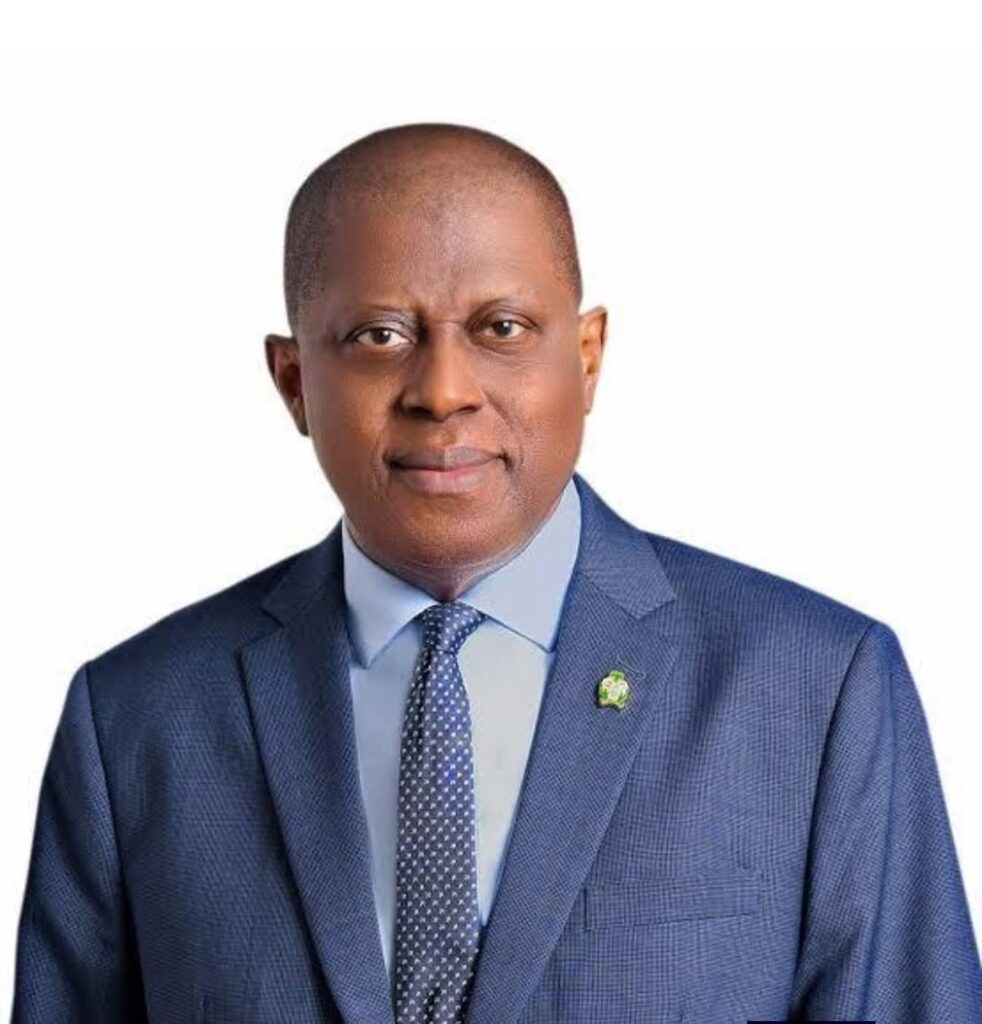
GOVERNOR of the Central Bank of Nigeria (CBN), Olayemi Cardoso, on Thursday, stated that Nigeria is now in a significantly stronger position to withstand global economic shocks, following the sweeping macroeconomic reforms and financial sector strengthening carried out over the past two years.
Cardoso said the reforms have rebuilt investor confidence, strengthened financial institutions, and improved the country’s foreign exchange market, placing the economy on a firmer footing despite renewed geopolitical tensions and global uncertainty.
Speaking at the Distinguished Alumni Lecture, held as part of the Founders Day celebration of St. Gregory’s College in Lagos, Cardoso said the foundations laid by recent policy measures would help Nigeria navigate emerging global risks.
Delivering a lecture titled: “Strong Foundations: From the Classroom to the Capital Base,” the CBN governor noted that recent geopolitical developments, including tensions arising from the US–Israel–Iran conflict, could disrupt supply chains, push energy prices higher and heighten investor caution globally.
However, he stressed that Nigeria’s economic buffers are now significantly stronger.
“The macroeconomic reforms and policy buffers we have built over the past two years have placed Nigeria in a far stronger position to navigate these challenges,” Cardoso said.
“The storms may come, but our house will stand firm. Strong foundations matter – whether for individuals, institutions, or nations.”
Cardoso said the rebuilding of trust in Nigeria’s economic management had led to a surge in capital inflows.
According to him, capital and investment flows into the country increased by nearly 200 percent between 2023 and 2025, reflecting renewed confidence among both domestic and international investors.
He added that Nigeria’s external reserves have also improved significantly.
“Our external reserves have recently exceeded $50 billion, reflecting structural improvements in our balance of payments and increasing investment flows into the Nigerian economy,” he said.
Cardoso explained that reforms in the foreign exchange market had helped restore liquidity and transparency, while eliminating distortions that previously undermined investor confidence.
He noted that the backlog of unmet foreign exchange demand has been cleared, enabling market participants to transact more efficiently without relying on extraordinary interventions by the central bank.
“The relative stability of the currency we are seeing today is not an accident but the result of deliberate efforts to rebuild trust and strengthen the confidence of both domestic and international investors,” he said.
The CBN governor also highlighted the impact of monetary policy reforms in addressing inflationary pressures.
According to him, the bank’s return to orthodox monetary policy and its decision to end quasi-fiscal interventions have helped stabilise the macroeconomic environment.
Cardoso also pointed to progress in the banking sector recapitalisation programme introduced in 2024, describing it as a strategic reform aimed at strengthening the financial system and enabling banks to support Nigeria’s long-term economic transformation.
“As of today, March 12, 2026, thirty-three banks have successfully raised additional capital, while thirty have already met the new minimum capital requirements for their respective licence categories,” he said.
He explained that stronger bank capital would enhance the ability of financial institutions to withstand shocks, expand lending to businesses and boost overall confidence among investors and depositors.
Beyond traditional banking, Cardoso said Nigeria’s rapidly growing fintech ecosystem is also playing a key role in expanding financial inclusion and modernising the country’s financial architecture.
He noted that digital payments, mobile banking platforms and other financial technology innovations are enabling millions of Nigerians to access financial services while creating new economic opportunities.
According to him, the CBN is establishing stronger regulatory frameworks covering areas such as Know-Your-Customer (KYC), anti-money laundering (AML) compliance and operational risk to ensure that innovation in the sector grows sustainably.
“These measures are not obstacles but the infrastructure that ensures innovation can scale sustainably,” he said.
Cardoso also emphasised the role of education and strong values in building resilient institutions and economies, noting that schools such as St. Gregory’s College help instil discipline, integrity and responsibility in future leaders.
He urged students and young professionals to develop multidisciplinary skills as emerging technologies such as artificial intelligence, fintech and data science reshape global industries.
“The careers of the future will reward those who are curious, adaptable and willing to learn beyond the limits of a single field of study,” he said.
Cardoso concluded that building strong foundations in education, institutions and financial systems remains essential to securing Nigeria’s economic future.
“If we build those foundations well – in our schools, in our institutions, and in our financial system – then Nigeria’s future will be not only promising but secure,” he said.
Nigerian Tribune