
Nigeria’s US$46.7bn FX reserves not built by borrowing — Cardoso
Nigeria’s external reserves have surged to US$46.7 billion, the highest level in nearly seven years, but unlike previous episodes of reserve accumulation, the Central Bank of Nigeria (CBN) says this rise was not driven by external borrowing.
Instead, it is the result of stronger market fundamentals, improved policy credibility and sustained reforms.
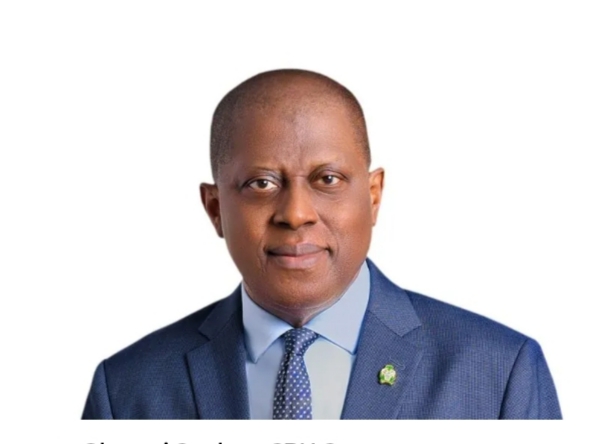
CBN Governor, Olayemi Cardoso, stated this on Friday at the Chartered Institute of Bankers of Nigeria (CIBN) Annual Bankers’ Dinner, where he delivered a wide-ranging address on the health of the economy and the progress of ongoing monetary and financial market reforms.
Cardoso disclosed that Nigeria’s current account balance rose by more than 85 per cent to US$5.28 billion in the second quarter of 2025, up from US$2.85 billion in the first quarter, strengthening the external sector and boosting confidence.
“Our foreign reserves reaching US$46.7 billion by mid-November, providing over 10 months of import cover, is a clear indication of resilience. What is most important is that our FX reserves are being rebuilt organically, not by borrowing, but through improved market functioning, stronger non-oil exports and robust capital inflows,” he said.
According to the CBN Governor, while oil production improved modestly to between 1.45 and 1.52 million barrels per day in 2025, the real progress is coming from the non-oil economy. Non-oil exports grew by more than 18 per cent year-on-year, supported by reforms and a more flexible, market-driven foreign exchange system that has enhanced competitiveness.
Diaspora remittances also improved, rising by about 12 per cent in 2025 as confidence returned to official channels. Cardoso noted that the Non-Resident Bank Verification Number (BVN) framework, introduced earlier in the year, would further strengthen inflows in 2026 by easing participation for Nigerians abroad.
Cardoso described the transformation of the foreign exchange market as perhaps the strongest signal of renewed confidence in the economy. The CBN, he said, has sustained the unification of multiple FX windows, cleared the once-crippling multi-billion-dollar FX backlog, and tightened transparency rules.
He highlighted the Nigerian Foreign Exchange Code — which sets governance, ethics and transparency standards for authorised dealers — alongside the rollout of the Electronic Foreign Exchange Management System (EFEMS), powered by Bloomberg’s BMatch. These measures, he said, have “reduced opacity and manipulation, restored discipline, and enabled real-time regulatory visibility.”
As a result, the naira now trades within a stable and narrow band, while the spread between official and parallel market rates has shrunk to less than 2 per cent, compared to more than 60 per cent previously.
Foreign capital inflows have risen sharply, hitting US$20.98 billion in the first ten months of 2025 — a 70 per cent jump over total inflows recorded in 2024 and a staggering 428 per cent increase from the US$3.9 billion seen in 2023.
Cardoso also outlined reforms in the fixed-income market, carried out in collaboration with the Securities and Exchange Commission (SEC) and the National Pension Commission (PENCOM). These efforts are intended to deepen liquidity, strengthen transparency and improve monetary policy transmission.
He affirmed that the CBN remains committed to maintaining a flexible exchange-rate framework, unveiling a revised FX Manual soon to expand market participation and strengthen documentation and surveillance.
“The Central Bank of Nigeria will do everything necessary to protect the financial stability that is rewarding us with improved international investor sentiment,” Cardoso assured.