
PEOPLE OVER PROJECTS : How Senator Saliu Mustapha Is Investing in Kwara’s Next Generation.
By Hon. Bashirat Kolawole
“Education is the most powerful weapon which you can use to change the world.” Nelson Mandela
There are different ways to measure political leadership. Some measure it by the number of projects commissioned, others by the size of infrastructure delivered. But perhaps one of the most enduring measures of leadership is the number of human lives transformed through access to education and opportunity.
It is against this background that the educational interventions associated with Senator Saliu Mustapha deserve to be examined beyond the immediate language of politics.
For Senator Saliu Mustapha, the investment in education did not begin with his election to the Senate. His support for young people predates his current public office, through interventions such as assistance with JAMB registration, free lessons, exercise books and other forms of educational and humanitarian support.
What has changed is the scale and institutional reach of the intervention.
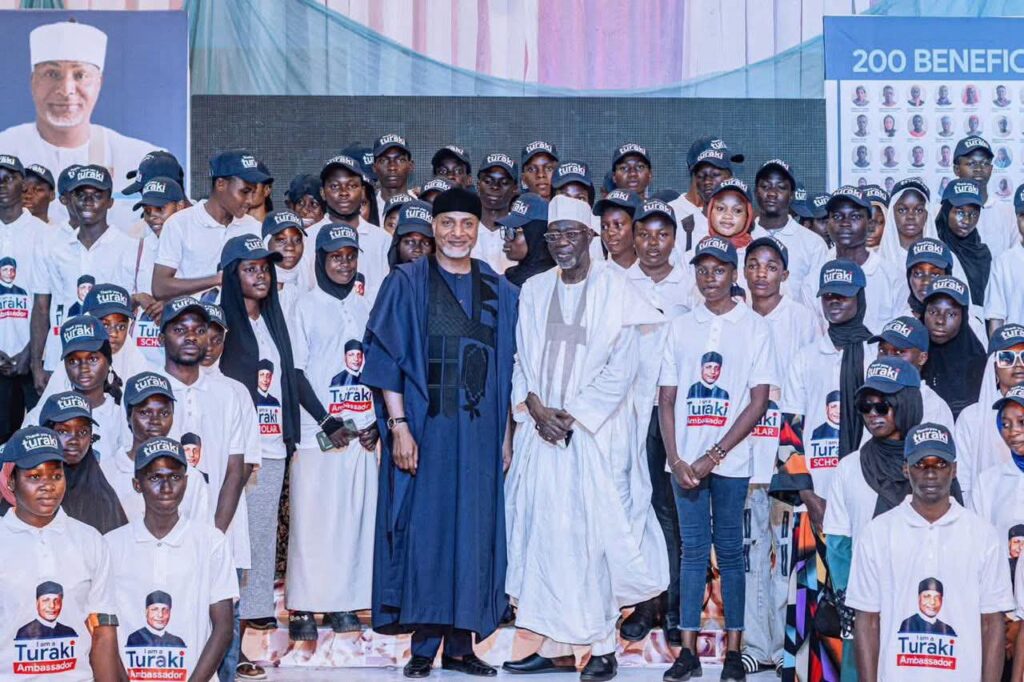
Today, hundreds of students across Kwara State are receiving support toward their university education. With more than 500 students expected to complete their university education through this support, the significance of the intervention goes beyond the immediate financial relief provided to individual families.
It represents an investment in human capital.
A tuition payment may appear, on the surface, to be a simple financial intervention. But behind every student whose tuition is paid is a family relieved of financial pressure, a young person given the opportunity to remain in school, and potentially, a future professional whose knowledge may eventually serve society.
This is why education remains one of the most consequential areas of public investment.
The return on education is rarely immediate. A road can be commissioned and seen instantly. A building can be completed and physically inspected. But the outcome of educational investment often takes years to become visible.
A student supported today may graduate years later. That graduate may become a teacher, doctor, lawyer, entrepreneur, civil servant, engineer or community leader. The impact then moves beyond the individual to families, institutions and communities.
This is where the deeper meaning of Senator Saliu Mustapha’s educational intervention lies.
The ultimate achievement will not simply be the number of tuition fees paid. It will be the number of lives that those payments helped to change.
Years from now, when these beneficiaries walk across graduation stages, receive professional qualifications and begin contributing to the economy and society, the significance of today’s intervention may become much clearer.
Beyond politics
Political activities are often measured by the immediate moment: elections, campaigns, appointments and political contests. Education operates on a different timeline.
It is about the future.
That is why the story of educational support deserves to be documented independently of political seasons. The students being supported today will eventually become adults whose personal and professional journeys will provide a more lasting account of the value of the intervention.
Senator Saliu Mustapha’s educational support therefore raises a broader question about leadership: What happens when political resources are directed toward developing people rather than merely addressing the demands of the moment?
The answer may not be completely visible today.
But it will become visible in classrooms, workplaces, businesses, professional institutions and communities in the years ahead.
Building People, Building Kwara
Kwara’s greatest resource is not only its land, infrastructure or institutions. Its most valuable asset is its people.
Every young person who is given the opportunity to remain in school represents an investment in that human capital.
Supporting a student through university is therefore not simply an act of assistance. It is a contribution toward building a more educated population capable of participating meaningfully in the development of the state.
From his earlier support for JAMB candidates, free lessons and educational materials to the broader support now reaching university students, the trajectory points toward a consistent emphasis on education and human development.
The significance of this should not be reduced to political slogans.
It should be documented, followed and, most importantly, measured by the lives affected.
Some legacies are written in concrete. Others are written in institutions. But the most enduring legacies are often written in people.
The students receiving educational support today may become the graduates, professionals and leaders of tomorrow. Their achievements will ultimately provide another chapter to the story of the investment made in them.
That is why the most important part of this story may not yet have happened.
The future graduates will write it.
And when they do, the question will not simply be how much was spent on education, but how many dreams were kept alive, how many young people were able to complete their studies, and how many families were given a reason to believe in a better tomorrow.
Beyond politics, that is the essence of investing in education.
It is an investment whose greatest dividends may be collected by a generation yet to come.
Hon. Bashirat Kolawole (HBK)